- Automate & Grow with A.I.
- Posts
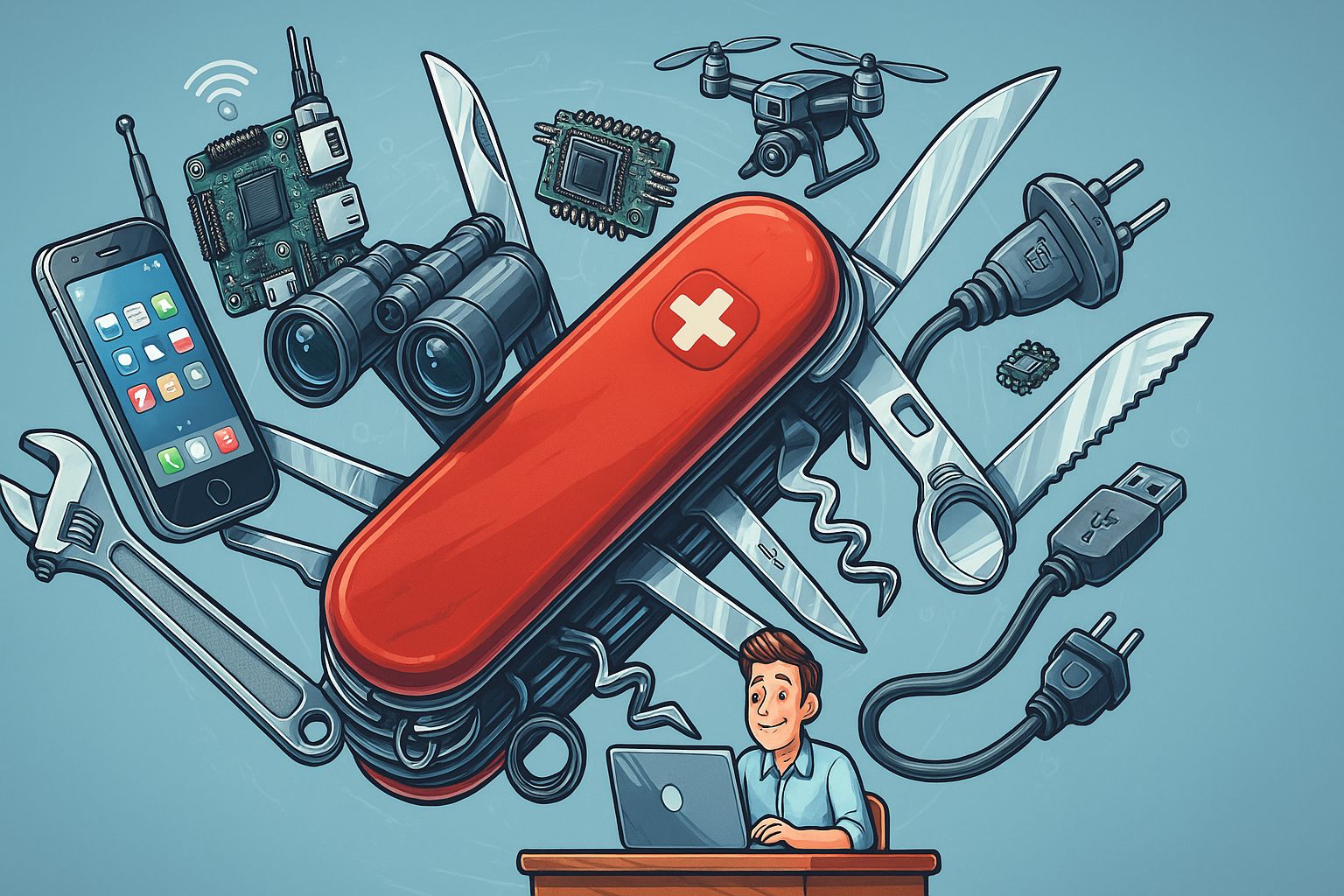
- Multimodal AI: The Swiss Army Knife That Thinks
Multimodal AI: The Swiss Army Knife That Thinks

Founders Pack
August 20, 2025
Welcome back to Automate and Grow with A.I. — the place where we dig into the tech that’s quietly rewriting how we work, live, and (let’s be honest) procrastinate.
Today’s topic: multimodal AI
The kind of AI that doesn’t just do one thing well. It can read, write, see, listen, speak, reason, and sometimes even draw you a picture while explaining it.
If single-task AI is like hiring a specialist, multimodal AI is like hiring a genius intern who can design your pitch deck, translate it into Mandarin, summarize it in bullet points, then whip up a 3D product mockup — all before lunch.
From One-Trick Ponies to Full-Court Players
Old-school AI was narrow.
Speech recognition could transcribe your meeting notes.
Image recognition could tell you there was a dog in the picture.
Text generation could help you draft an email.
Each was useful
but they didn’t talk to each other.
Now? A multimodal AI can:
Look at a graph and explain the trend in plain English.
Hear your voice, detect urgency, and adjust its tone in response.
Take a blurry product photo, clean it up, and write a product description in your brand voice.
This isn’t just “smarter AI.” It’s context-aware AI. It understands the connections between different kinds of inputs — the way humans do — and that’s a massive leap.
Why This Changes Everything
Business today is rarely single-format. Your customers send emails, voice notes, screenshots, spreadsheets, videos. A tool that only understands one of those forces you to translate everything yourself.
Multimodal AI removes that translation layer.
It can move fluidly between data types without breaking your workflow.
Imagine:
A support chatbot that can read an angry customer email, glance at their last invoice PDF, and check the attached photo of the broken product — all before responding.
A marketing tool that can turn your sales call transcript into a blog post, pull three social media graphics from it, and generate an email newsletter, no copy-paste marathon required.
An analytics dashboard that can read your raw CSV, visualize it, and tell you what matters most — without you lifting a finger.
This isn’t incremental change. It’s a workflow collapse. Tasks that used to require multiple tools, file formats, and handoffs can now be done in one conversation.
The real power here isn’t just efficiency.
It’s insight.
Because when one AI model sees everything at once — your text, your visuals, your tone of voice, your historical data — it spots patterns that you’d never notice juggling separate tools.
That’s how you find the customer segment you’ve been ignoring.
Or realize your best-selling product photos all have the same background color.
Or discover that your sales dip happens every time your support response time spikes.
This is where multimodal AI goes from “helpful assistant” to “strategic partner.”
Where This Is Headed
We’re still in the early innings. Right now, multimodal AI feels like magic because it’s collapsing barriers between media types.
But soon, it’ll be expected.
Just like nobody gets excited that their phone can take a picture and send a text — we’ll stop thinking of “multi-skill” AI as special. It’ll just be the default.
And when that happens, the real competitive edge won’t be having access to the tech — it’ll be knowing how to design your business around it before your competitors do.
That’s the game we’re playing: spotting these shifts early, testing them in the wild, and figuring out how to make them work for actual businesses — not just demo videos.
So here’s your takeaway: if your current tools only understand one type of input, start experimenting now with ones that understand many. The sooner you collapse the workflow, the faster you’ll outpace the people still stuck stitching file types together.
Because the AI intern? They just learned how to run the whole department.